
Turbocharger VS Supercharger
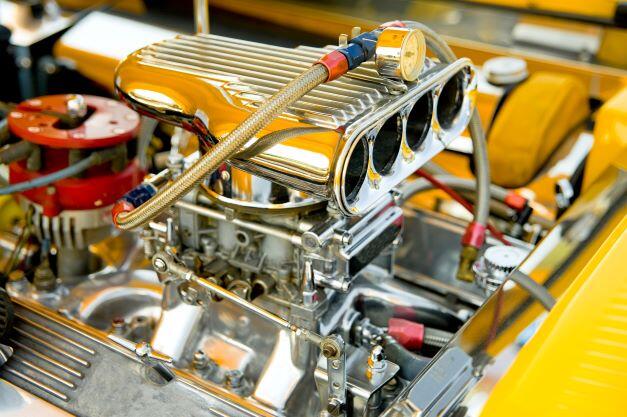
Regarding enhancing engine performance, turbocharging and supercharging are the two primary ways. Both forced induction methods share the common purpose of boosting horsepower in normally aspirated engines. Although the two technologies are sometimes mistaken for one another or used interchangeably, distinct differences set them apart.
Turbochargers and superchargers:
Before discussing their differences, it helps to understand what links turbochargers and superchargers from an engineering standpoint. Turbochargers and superchargers are forced induction systems. These systems use compressors to push compressed air into the engine. The compressed air allows for extra oxygen to reach the engine, which helps create an extra boost of power.
The main difference between turbochargers and superchargers is their energy source. Turbochargers use the vehicle’s exhaust gas; two fans – a turbine fan and a compressor fan – rotate from the exhaust gas. Conversely, superchargers are powered directly by the engine; a belt pulley drives gears that cause a compressor fan to rotate.
What is Turbocharging?
As exhaust gasses pass through and spin a turbine, the turbine creates a vacuum that compresses air before forcing it into an engine’s intake manifold. As the engine spins faster, so does the turbine, sending even more air into the motor and boosting power by 25% to 40%.
However, this system is not instantaneous. Since an exhaust-driven turbine takes time to spool up and the turbine must spin at a specific rate of speed for optimal boost, the system will often experience a lag. This delay, known as a “turbo lag,” is a momentary power lapse as the turbocharger tries to get up to speed.
Turbochargers are not as powerful as superchargers, but since they run off recovered energy from exhaust gasses, they improve the engine’s overall efficiency. A turbocharger also utilizes a wastegate that reduces the emission of exhaust gasses into the environment.
What is Supercharging?
A supercharger is connected to the engine by a belt or chain. As the engine’s crankshaft spins, the supercharger spins along with it. Like with the turbocharger, the spinning creates a vacuum that compresses air and forces it directly into the engine.
The direct-drive relationship between the supercharger and the engine creates a linear powerband that results in an instantaneous boost of 30% to 50%. The supercharger provides this optimum boost throughout the rev band without any lag.
This direct connection to the engine makes superchargers more powerful than turbochargers, but this also makes superchargers considerably less efficient. In the end, they are designed to produce engine power by drawing engine power. In some ways, they are like powering an air pump with another air pump.
Also, unlike a turbocharger, a supercharger does not utilize a wastegate. This means it emits more smog than its turbocharged counterpart.
Which Is Better: Turbo- Or Supercharger?
Each can be used to increase power, fuel economy, or both, and each has pros and cons. Turbochargers capitalize on some “free” energy that would otherwise be completely lost in the exhaust. Driving the turbine does increase exhaust backpressure, which exerts some load on the engine, but the net loss tends to be less by comparison with the direct mechanical load that is driving a supercharger involves (the biggest blowers powering a top-fuel dragster consume 900 crankshaft horsepower in an engine rated at 7,500 total horsepower). But superchargers can provide their boost almost instantly, whereas turbochargers typically suffer some response lag while the exhaust pressure required to spin the turbine builds. A top-fuel dragster trying to run the quarter in four seconds has no time to waste waiting for exhaust pressure to build, so they all use superchargers.
Although the saying goes, “there is no replacement for displacement,” turbochargers and superchargers are highly effective ways to get more power and performance from any engine. But each system comes with a unique set of trade-offs. Turbocharging is the better choice for those looking to balance performance with fuel economy and efficiency. For those more interested in a straightforward solution to raw horsepower, supercharging is likely the way to go.
What To Put In Mind When Buying A Sedan?
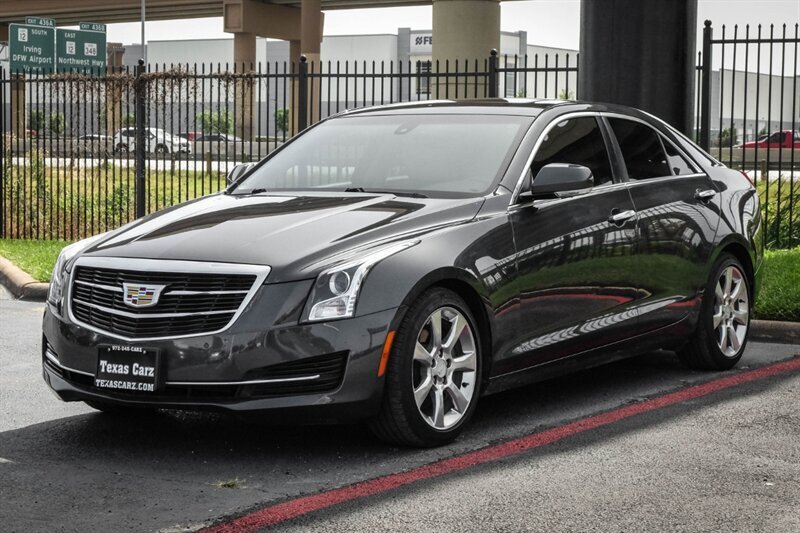
It’s important to consider many factors when buying a new car. What type of vehicle do you want? A Sedan, Hatchback, or SUV? Are you looking for a specific size? Are there any features that are important to you? What is your budget?
It is important to consider these guides before making a purchase carefully. But if you’ve limited your search to Sedans. Selecting the right Sedan type will help narrow your search. The different types of cars (midsized, large, and luxury) have a wide range of models, so creating a shopping list from them can be a helpful step.
Sedan Types
Midsized:
A wide range of models are competing for business, offering buyers a wide selection of options. Front-wheel-drive is typically the most common configuration.
In this segment, some manufacturers offer hybrid powertrains as well. Today, four-cylinder engines are most common as the days of smooth, powerful V6s are numbered.
Large:
In this industry segment, Detroit is dwindling, with only Chrysler and Dodge still offering rear-wheel drive and V8 engines. The car is a good value for those looking for a luxury car without the price tag. There is plenty of interior space, and the ride is smooth and quiet. However, performance-oriented hybrid powertrain options are available.
Luxury:
Many companies manufacture smaller luxury Sedans for those looking for prestige-branded cars. For the same money, a top-trimmed mid size Sedan with comparable luxury can offer more space and performance.
Newcomers like Genesis and Tesla have made significant progress in this sector. Tesla’s electric vehicles have grown from environmentally friendly choices to bona fide status symbols.
Once you have decided which Sedan size you require, you need to answer these questions:
1. What is your budget?
Your budget will determine which model you can afford. Include all your lifestyle expenses, such as your mortgage or rent, groceries, childcare, and utilities. Afterward, calculate how much you can comfortably afford for a down payment plus monthly payments on a car loan. Don’t forget to budget for gas, insurance, and maintenance.
You may have to compromise on some features when you have a limited budget.
2. How Much Maintenance Does It Need?
Some models require more maintenance than others, but all cars need routine maintenance. Research the common problems associated with the make and model of the car you’re interested in before making a purchase. In this way, you’ll be able to budget for future repairs and know what to expect in the future.
If your friends or family members have any experience with the car you’re considering, you can ask them. They may reveal the maintenance needs of the vehicle.
3. What is the Fuel Economy?
Gas mileage for Sedans is generally about 30 mpg, but some models are considerably better. Knowing how much your car will consume of fuel will be better.
4. What About Highway Driving?
You use this vehicle daily. As a commuter, a road tripper, and someone who cruises on the highway for a living, you’re likely to spend a lot of time in it. When you test the new Sedan, turn off the stereo and get the vehicle up to speed to observe the amount of road noise and wind noise. Also, you will be able to determine how stable the vehicle is at high speeds and how well it rides on the highway.
Considering how many Sedan options are available, shopping for one can be overwhelming. Finding a Sedan you love can be narrowed down by asking yourself what’s most important to you.
The Difference Between Horsepower And CC
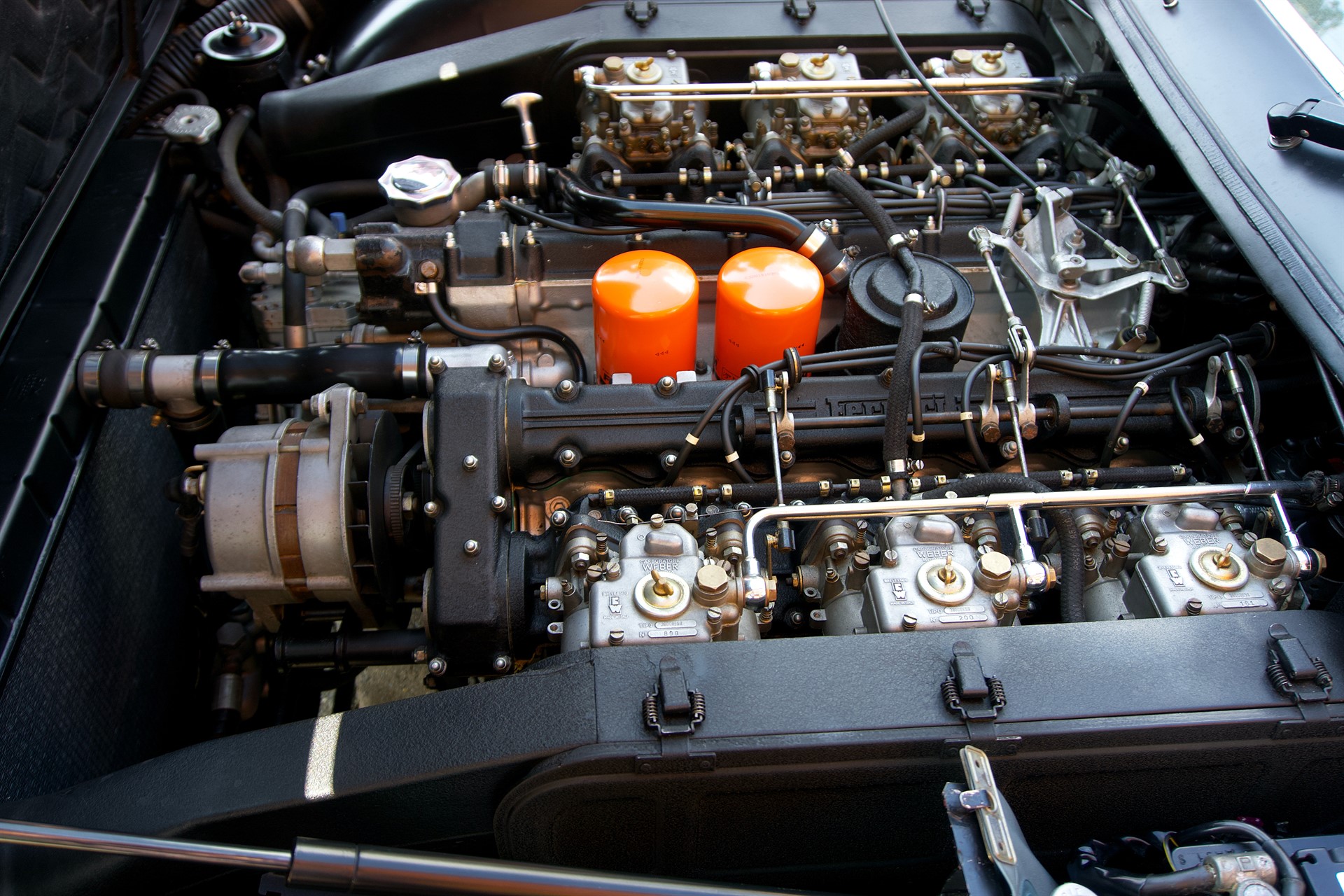
Horsepower and Engine CC are two very diverse concepts that are not mutually exclusive. Both are measurable, but one needs slightly more proprietary tools to quantify than the other. Let us break it down.
What is Horsepower?
Horsepower is the unit of measurement used to measure the power of an automobile engine. The higher the Horsepower or HP, the higher the power sent to the wheels; thus, the higher the car’s speed.
It is measured in Brake-Horse-Power or BHP, Pferdestärke or PS, the German translation of HP. It is measured in the Feet-Pound-Force-Per-Second or FPS in the British system, while in the metric system, it is generally measured in Kilowatt or KW.
Horsepower is of two types- Frictional Horsepower and Indicated Horsepower. Indicated Horsepower is defined as the original power used by the automobile engine. Knowing a vehicle’s Horsepower is reasonably necessary to understand the speed and performance of its engine. Thus, it is also known as the output of the engine.
What is CC?
Cubic Centimeters or CC is used to know the size of the automobile engine. It also signifies how large and heavy the engine is. Thus, it helps us understand the pumping capacity of the engine.
1000 CC = 1 Liter.
This means that a 1000 CC engine is the equivalent displacement to a 1-Liter engine. The CC of an automobile’s engine is the total volume of all the cylinders in that engine. Thus, it measures the swept volume of the cylinders of the engine.
A higher CC can be achieved by making the engine of the vehicle larger and more robust, creating more displacement. The following formula can calculate cubic centimeters- 0.7854 x bore x bore x stroke x number of cylinders. However, there are other far more complex formulas as well.
Moreover, the displacement of a vehicle can be calculated in cubic inches by substituting the measurements in inches – 8.1cm = 3.189″ & 7.76cm = 3.055″ giving 0.7854 x 3.189″ x 3.189″ x 3.055″ x 4 = 97.6 cu.in.
It is important to note that the cubic capacity of vehicles is usually in the range of 50 CC to 1500 CC.
Difference Between Horsepower and CC
Definition of Horsepower and CC
Cubic capacity provides information about the size of the engine. It specifies how large and heavy the engine is and explains its dynamic response depending on the materials integrated into the moving parts. It can be said that it represents the pumping capacity of the engine. Horsepower gives information about the power of the vehicle (work done by the engine). It usually represents the peak power and is related to the maximum speed the vehicle can achieve.
Calculation of Horsepower and CC
Displacement is measured (calculated) as the total volume of the chambers. The volume is obtained from the diameter of the cylinders (the bore), the distance the piston travels (stroke) as well as the number of cylinders of the engine. Horsepower is determined by multiplying the torque (measured with dynamometer) by the engine speed (measured with tachometer) and dividing by 5252 (radians per second).
Factors influencing Horsepower and CC
Horsepower depends on the engines’ design and tuning, capacity and size, type of fuel used, number of valves, valves’ timing, the air changing method (natural, turbocharged, supercharged), the fuel delivery method, and so on. The cubic centimeters will depend on the engine’s design, bore (diameter), and number of chambers.
The link between Horsepower and CC
Although there is no straightforward link between Horsepower and CC, we can say that 1Ks = 14-17CC. Furthermore, there is a general conviction that higher engine displacement results in higher Horsepower (not necessarily always true and without a linear relationship).
Conclusion
Both Horsepower and CC are quite essential to know before we tend to buy a new vehicle like a brand-new car, a bike, or even a lawn mower.
Futuristic cars, with their first-class design and efficiency, have started to introduce 1000 Horsepower on their engines, which means that the car can drive at the speed of about 300 miles per hour.
What To Put In Mind When Buying A Supercar?
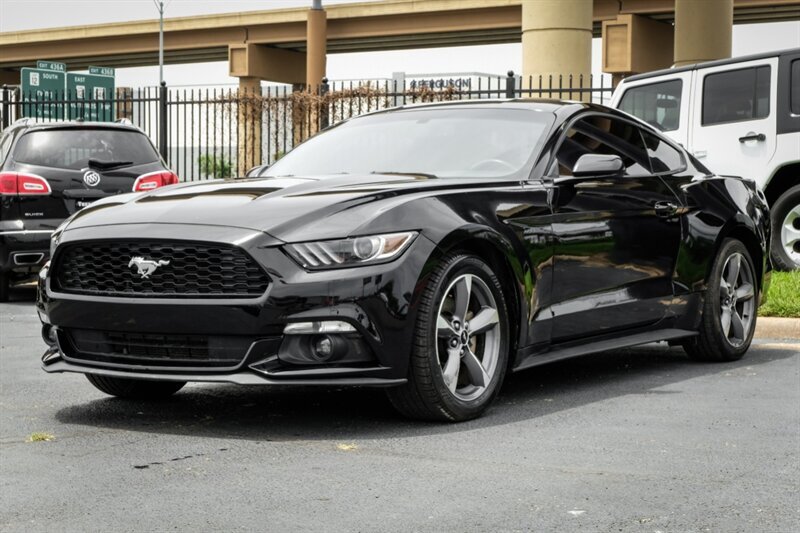
Choosing a supercar is a big responsibility. Each of your options for supercars is so awe-inspiring that you may need some help narrowing down your choices. When choosing a supercar, this article will help you decide what is most important when buying one.
Horsepower
Supercars are renowned for their horsepower. It is one factor that makes them worth owning and worthy of the title of” supercar.” Make sure to research the specifications of each supercar you have your eye on. Horsepower is one of a supercar’s most marketable traits, along with top speed and handling.
Top Speed
While most supercars don’t exceed the 300 mph mark for speed, they still all possess incredibly high top speeds. When choosing your supercar, make sure to consider its top speed. That way, whether you are cruising on the track or the highway, you will know what your vehicle is capable of.
Handling
Although all supercars are built to varying degrees of perfection, one of their similarities is that they are all special machines in their unique ways. Since they all have different road manners, go for a spin to determine what’s best for your level of expertise and how you plan to use it. How a supercar responds at low speeds determines whether it can be a perfect daily driver or not. After all, you don’t want to pay good money for a car that will throw you into ditches at the least opportunity.
Rarest
Take Bugatti, for example. In 10 years, the company produced 450 Veyrons in four different versions, but for heightened exclusivity, there came a steady stream of about 60 rare or one-off special edition Veyrons. In 2018 the Sport version of the Chiron was unveiled, and now there are two new models based on that: the 110 Ans Bugatti (20 are to be built) and the Divo. If you have the money and the influence, in the hypercar world, rarity comes in abundance.
Your Driving Abilities
A supercar is a big responsibility and merits a wealth of experience driving high-performance machines. If you lack the skills to drive a supercar, you may want to keep buying one until you have spent more days at the track.
The last thing you want to do is blow out the transmission on your new Ferrari because you are not comfortable driving a stick. Even worse, you could flip your new beast by not knowing how to control it on the roads. Make an honest assessment of your driving abilities and if you find them lacking, take driving classes and get more experience before buying a supercar.
Texas Carz family offers the best-used cars at competitive prices. Contact us:
Phone Number: 972-248-2279
What To Put In Mind When Buying A Coupe?
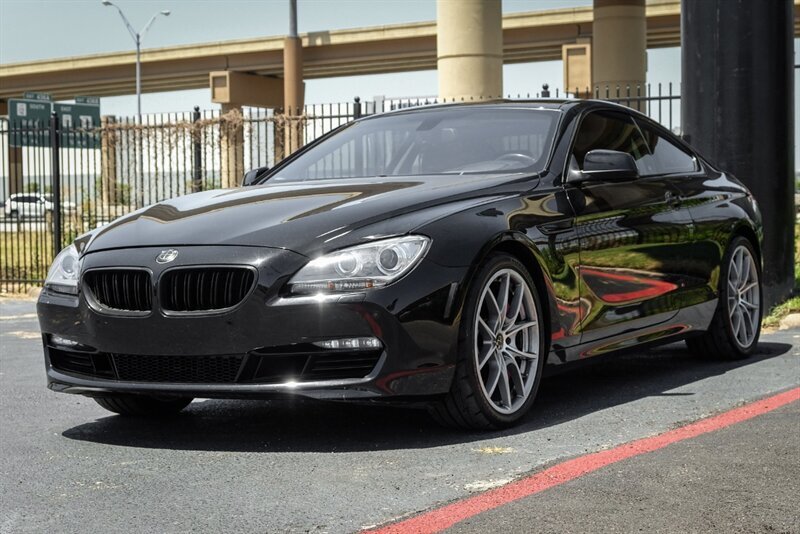
When stance, style, and performance prioritize rear-seat legroom or trunk space, shop coupes instead of dime-a-dozen SUVs and sedans. Coupes, generally two-door vehicles, are often based on a larger sedan model within the same vehicle line. Some cars have hatchbacks yet are still classified as coupes due to having only two doors. This article will help you with some factors when buying your first coupe car.
1. Available as Economy or Luxury Models.
When most think of two-door vehicles, smaller compacts often come to mind. While there are a number of coupes, like the Honda Civic, that start at around $18,000 or more, many others have significantly higher price tags. For example, a 2016 Audi R8 starts at $162,900 – before you start adding on optional extras.
2. Power versus Fuel Economy.
Suppose you are looking for power in a coupe. In that case, only the premium and luxury models will satisfy you, such as the Audi TT, the Cadillac ATS-V, the BMW M4 with 425 horsepower, and the Audi RS5. Check out the Ford Mustang Shelby GT350R with 526 hp for something really aggressive.
Who says power says gobbling fuel like it’s running out of fashion, so if you are environmentally minded, you will have far fewer options outside of BMW’s i8 hybrid car.
3. Engine Size.
When many buyers think of a coupe, they often jump to the four-cylinder options, especially considering lower-end models or hatchbacks. However, today, coupes are available with six- and eight-cylinder engines, providing plenty of power in a smaller body style. When owning a coupe, the options are as varied as other vehicle models, ensuring the right combination of size and power to meet your driving style and performance needs.
4. Technology and Safety.
Whether you have set your sights on a low-cost coupe or a hypercar, there are all sorts of weird and wonderful technology on offer.
The Honda Civic, for example, comes with LaneWatch, a side-mirror camera that projects what it sees onto your infotainment screen. It can be distracting at first, but once you have gotten used to it, it is a very helpful system. If you want something cooler, the Audi TT’s virtual cockpit has integrated the infotainment system onto the instrument panel and virtual gauges.
As far as safety is concerned, the offer is a bit hit-and-miss. You can find adaptive cruise control, traffic jams, parking assistance, and more.
5. Fuel Economy.
The ever-fluctuating gas prices that plague us today have many focusing on the overall fuel economy offered by a particular vehicle. Generally, coupes provide higher fuel economy than their larger counterparts, with some providing 30 mpg or better. Even those with larger engines offer improved fuel economy compared to what was provided by similar engines in the past. A coupe’s aerodynamic shape adds to this.
Texas Carz family offers the best-used cars at competitive prices. Contact us:
Phone Number: 972-248-2279
What You Need to Know about General Motors

The General Motors Company is an American multinational automotive manufacturing company headquartered in Detroit, Michigan, United States. It is the largest automaker in the United States and was the largest in the world for 77 years until losing the top spot to Toyota in 2008.
General Motors (GM) operates manufacturing and assembly plants and distribution centers throughout the United States, Canada, and many other countries. The company’s major products include automobiles and trucks, automotive components, and engines, and it is also engaged in financial services.
The History
Under the leadership of William C. Durant, the General Motors Company was founded in 1908 to consolidate several motorcar companies producing Buick, Oldsmobile, Cadillac, Oakland (later Pontiac), Ewing, Marquette, and other autos as well as Reliance and Rapid trucks. GM introduced the electric self-starter commercially in its 1912 Cadillac, and this invention soon made the hand crank obsolete. GM remained based in Detroit and was reincorporated and named General Motors Corporation in 1916. The Chevrolet auto company and Delco Products joined GM in 1918, and the Fisher Body Company and Frigidaire joined in 1919 (the latter was sold in 1979).
General Motors Automotive Brands
Buick
Buick is one of the GM car brands, but it is the oldest. Created in 1903 and later sold to GM in 1908 when Buick founder David Dunbar Buick invested in General Motors.
Since its purchase, Buick has produced various generally considered stylish and upscale vehicles.
On the other hand, Some of its most well-known models include LeSabre, Riviera, Century, Lucerne, Enclave, and Verano. The GM car brand has won numerous awards and is a significant player in GM’s portfolio today.
Cadillac
First launched in 1902, Cadillac was an American luxury GM car brand owned by General Motors. The Cadillac Fleetwood 75 limousine was inducted into the National Historic Vehicle Register in 2006.
And has been listed in The Top 10 Best-selling Cars of All Time by Guinness World Records. However, Motor Trend magazine named Cadillacs a Car of Excellence for ten years.
The company branched into aviation with its division, Marmon Herrington, which produced aircraft engines during World War I.
GMC
GMC is short for General Motors Company, an American automaker headquartered in Detroit, Michigan. Formerly known as General Motors of Canada Limited, GM Canada is a separate company from its U.S.-based counterpart. The Canadian subsidiary provides products and services to customers in both countries.
However, there are differences between GM cars sold on either side of their shared border. For example, GM car brands sold in North America can be equipped with front-wheel drive. But vehicles marketed in Canada will likely only have all-wheel drive.
So, while they share many core features, some variations may make it necessary to consider whether you’re buying a Chevy or Buick (or something else) if you’re looking to replace your car and live on either side of that international border.
Chevrolet
Chevrolet is the most popular GM car brand, one of only two major brands under GM car brands. It also includes GMC, while both companies specialize in trucks and SUVs. And some cars—Chevrolet’s most successful models are cars (the Corvette comes to mind).
Moreover, In 2016, 29% of new car sales were Corvettes, Camaros, and other sports cars traced back to Chevrolet. Impala, Cruze, and Malibu accounted for almost 20% of all Chevy vehicles sold.
Additionally, 15-20% of total sales were trucks like Silverado and Tahoe SUVs. It makes Chevrolet more than twice as large as its sister company under GM parent company General Motors Co.
Top 5 Most Expensive Cars in 2022
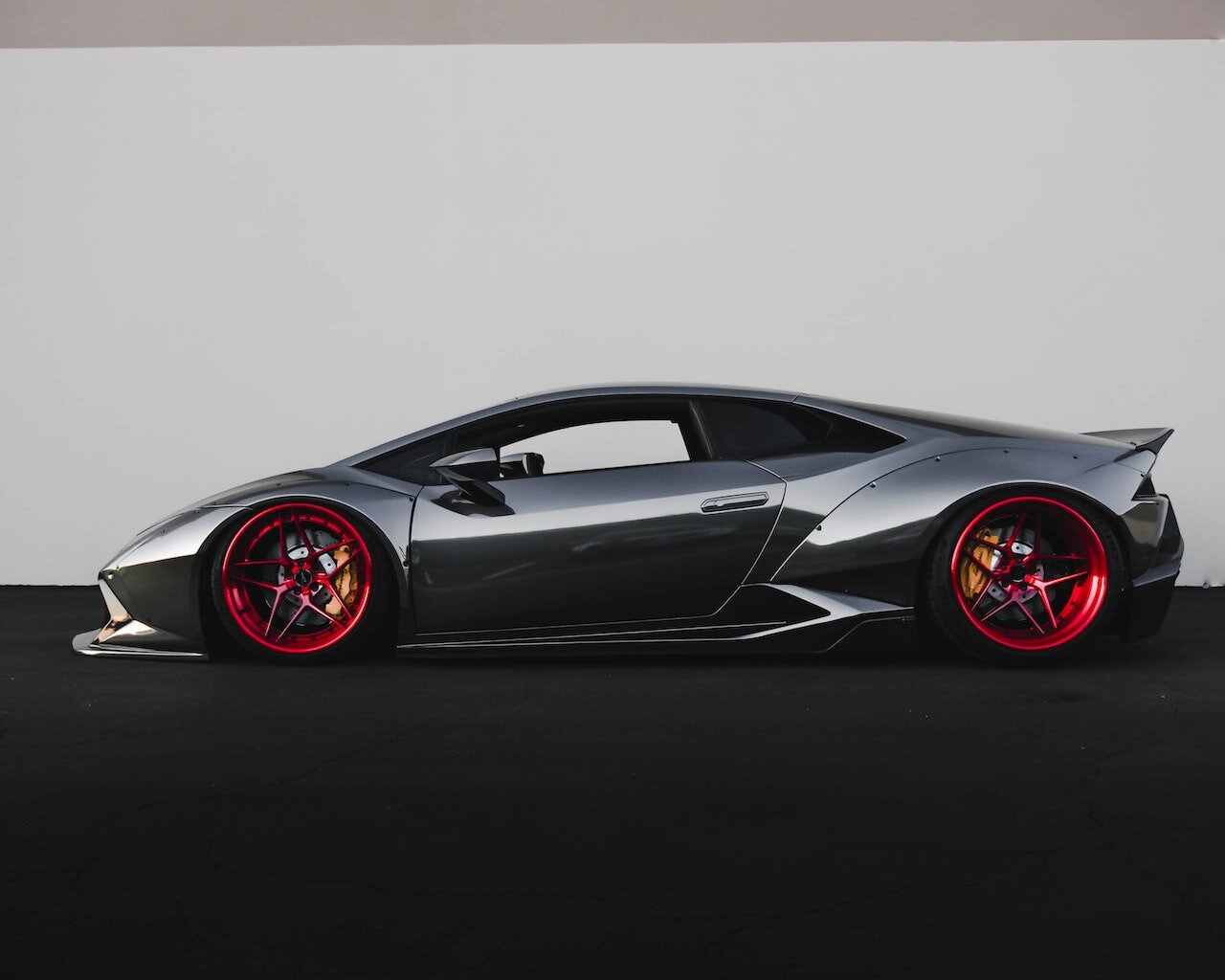
Throughout the years, we’ve seen some incredible vehicles with equally impressive price tags. The top 5 most expensive cars in the world are listed below. Automobile manufacturers like Rolls-Royce don’t hesitate to create opulent vehicles that set the standard for ultra-luxury vehicles. Take a look at them below.
5. Bugatti Centodieci: $9 million
The Bugatti Centodieci pays homage to a modern classic: the EB110. The 200+ mph icon of the 90s combined with the body of work Bugatti has today can only make for a truly amazing, one-of-a-kind, and costly vehicle. There will only be 10 of these, which is a shame because the Centodieci isn’t just about nostalgia. It sheds nearly 45 pounds and adds downforce over the Chiron.
4. Rolls-Royce Sweptail: $13 million
Its tapered rear end evokes a yacht and the sense of pure pleasure and luxury that only a Rolls-Royce can provide. The Sweptail has a glass roof that extends from front to back, and wood and leather decorate nearly every surface inside, so it is priced accordingly.
3. Pagani Zonda HP Barchetta: $17.5 million
Pagani Zonda is, by itself, an epic and historic supercar. As a result of its distinct design, Mercedes-Benz 7.3 litre V-12, and outstanding performance, it has become a classic and a legend. The HP Barchetta is the perfect car to do it justice. As if the Zonda wasn’t eye-catching enough, the HP Barchetta features rear wheels partially covered by a carbon fiber panel, as well as a roofless (and almost windshield-less) body design, proving it to be one of the most expensive cars in the world ever.
2. Bugatti La Voiture Noire: $18+ million
A breathtaking one-off Bugatti inspired by Bugatti’s legendary Type 57 Atlantic. Bugatti sought to recreate the sophistication and mysticism of the Atlantic, as well as the legend of the perfect car. La Voiture Noire is uniquely American, incorporating six tailpipes and a dorsal seam across the middle.
1. Rolls-Royce Boat Tail: $28 million
The Rolls-Royce Boat Tail is considered the most expensive car in the world. Designed by Rolls-Royce Coachbuild, it was inspired by everything nautical. It has Caleidolegno veneer on its “Aft Deck,” a wrap-around windscreen, and so many other nautical touches. A hosting suite in the rear includes everything you need for an al fresco dining experience. Additionally, Rolls-Royce Coachbuild included two BOVET 1822 reversible dashboard clocks. Rolls-Royce unveiled the Boat Tail for the first time at the Concours d’Eleganza Villa d’Este.
Texas Carz family offers the best-used cars at competitive prices. Contact us:
Phone Number: 972-248-2279
Most Popular Twins of Cars

The diversity of target people and the purchasing ability of consumers prompted car companies to manufacture several categories and classes of their cars with different values so that each of them suits the target people, and this was the ideal solution for car companies to stay in the market, we will present here some of the most popular examples of these cars and talk about them a little.
1. Toyota and Lexus:
Toyota owns the Lexus brand, but the Lexus brand adds premium luxury, style, and class that its Toyota counterpart cannot match and is more affordable than many luxury brands; they both are owned by one company so that you can name the Lexus as the Luxury class of Toyota.
2. Nissan and Infiniti:
If you’ve seen an Infiniti car, you probably realized that it is related to a Nissan, but what is the difference, and where does Infiniti come in the Nissan lineup? While Infiniti cars may seem like a Nissan with a different badge, there are quite a few changes. Infiniti is a luxury division of Nissan, and it was first introduced in the United States in 1989. Nissan wanted to target the premium vehicle market in the United States with cars that would not fit in with their more mainstream image.
3. Hyundai and Genesis:
Genesis announced itself as an individual marque in 2015, and the first purely Genesis models were produced in 2016. Though still the luxury division under Hyundai, Genesis separated its brand identity to distance its identity from Hyundai’s. Hyundai famously makes some of the most reliable and affordable vehicles for commuters, and Genesis makes executive luxury sedans. Considering that both brands target entirely different markets, it makes sense that Genesis would fare better in the luxury sector on its reputation for lavish high-performance vehicles.
We all know that there are many car brands around the world, but in fact, the companies that own all these brands are not many, but rather a few, and the competition between them is big to impose their control on the global car market, so these companies have created diversity in their classes to spread their products and deliver them to as many customers as possible.
5 Common Warning Lights on Your Car’s Dashboard

Colors matter when it comes to dashboard lights! Green or blue lights indicate that a system is running. Orange/yellow warning lights typically indicate that your vehicle needs to be serviced or repaired soon. There is less urgency in these warnings than if you have a red and/or flashing light.
Red lights mean the action is needed right away! Red dashboard lights can be safety warnings (like seat belt reminders) or mechanical (like overheating engines). You should pull over as soon as possible if you see a red mechanical light. Check out these 5 common warning lights on your dashboard.
1. Oil Pressure Warning Light
Old-fashioned oil can indicate a problem with your car’s oil pressure system. Either your engine has low oil, or your oil pump must circulate more fluid to lubricate the surfaces properly. (Note: Some dashboards display the word “OIL” instead of this symbol.)
2. Tire Pressure Warning Light
It is also known as the Tire Pressure Monitoring System (TPMS) symbol and it indicates an issue with your tire pressure.
3. Engine Temperature Warning Light
Your engine is overheating if you see this symbol. Coolant (also known as antifreeze) is most likely to blame, but it can occur for various reasons.
4. Traction Control Light
It indicates that your vehicle’s traction control system is active. The traction control system uses anti-lock brakes (ABS) to determine if one wheel is spinning faster than the others. When a wheel slips, the brakes are applied until traction is regained. When driving in rain or snow, this is especially helpful.
5. Anti-Lock Braking System (ABS) Warning Light
During hard braking, like on slick roads, the ABS pulses the brakes to prevent your wheels from locking up. An illuminated ABS warning light indicates a malfunctioning ABS.
Warning lights are sometimes displayed on your dashboard. There are some that deal with vehicle features (like lights and cruise control) or safety (like blind-spot monitoring and lane departure warnings), or mechanical issues (like low tire pressure and engine temperature warnings)
Hybrid Cars

Generally, a hybrid car has both an internal combustion engine (ICE) and an electric motor. In addition, hybrid cars have two batteries: one for the ICE and one for the electric motor. Hybrid cars can be classified according to how and when the electric motor and battery power the car and its components (mild, full, and plug-in).
Hybrid Cars: Pros and Cons by Type
Hybrid cars come in three main types, each with its advantages and disadvantages:
Mild Hybrid Cars:
Electric systems only assist the gas-powered engine when the vehicle is fully stopped by providing a brief acceleration boost. It also powers the heating, air conditioning, stereo, and other non-driving components. A mild hybrid car tends to be the least expensive hybrid type and offers some fuel savings over a gas-only model.
Full Hybrid Cars:
An electric system drives the powertrain of this type. Electric motors are usually used for city driving, while ICE/gas engines are used for highway driving. Despite being more expensive than mild hybrids (and ICE-only cars), full hybrids may retain a higher value over time. Additionally, they reduce environmental impact and fuel consumption. Due to the complexity of their engines, full hybrids may be more expensive to maintain.
Plug-In Hybrid Cars:
As their primary energy source, PHEVs use an electric motor and battery. The ICE may be used simultaneously or as a backup – coming on when the electric battery runs out. These are the most expensive hybrid cars, but their potential fuel savings are the highest. Environmentally friendly plug-in hybrid cars also have the lowest emissions. Ensure charging stations are available at home and along any longer routes you take to utilize the electric motor and battery fully.
You can invest in a more expensive car now, but it may save you money in the long run if you are concerned about your car’s environmental impact.
What type of hybrid you choose depends on where you live, how you commute, and how you live. People who own their own homes, have short commutes, and don’t typically drive long distances for pleasure are best suited for plug-in hybrids. In contrast, full hybrids are well suited to shorter commutes and city driving because this type of driving allows them to use their electric powertrain more. The fuel economy of full hybrids is also excellent for long drives.